Antibody development increasingly depends on understanding how molecules interact in 3D, not just whether or with what affinity they bind. Traditional methods to map antibody-antigen interactions provide indirect, low-resolution or often ambiguous insights, leaving critical questions unanswered at the moments that matter most:
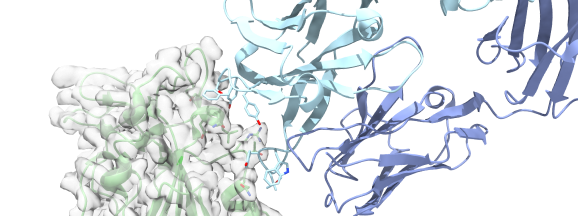
Cryo-EM closes this gap by directly visualizing antibody–antigen interaction in native conditions, delivering high-confidence answers on binding mode, epitope specificity, and conformational changes.
With ATEM’s high-throughput 3D Epitope Mapping workflow, these structural answers reach your team early in development, not only after a final candidate has been selected. The result: critical decisions can be backed by structural evidence, so you can advance to your next project milestone with confidence.
Cryo-EM 3D Epitope Mapping data transforms empirical structural insights into clear development decisions, reducing ambiguity and iteration cycles while identifying the best lead candidate from a given lead series.
Select lead and backup candidates that bind structurally diverse epitopes or specific regions or moieties on the antigen.
Identify epitope overlap and redundancy across candidates, insights far beyond of what is possible to achieve with affinity-based assays.
Strengthen IP positioning through unambiguous 3D epitope differentiation
Characterize lead candidates that may have similar affinity but different binding modes
Distinguish functional vs. non-functional binding
Select lead candidates that bind close to or away from certain antigen moieties (i.e. glycosylation sites, membrane anchors, phosphorylation or dimerization sites, other functionally relevant areas, etc…)
Confirm binding architecture of your antibody-antigen complex and deduce the biological mechanism of your lead candidates
Identify important conformational effects (i.e. the structural arrangement) on the antigen
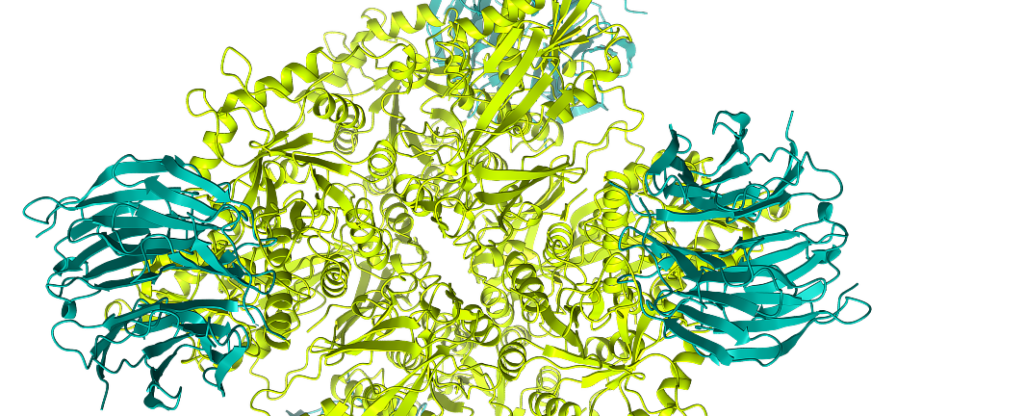
Determine whether a monomer or multimer of the antigen is bound by the candidate
Detect suboptimal binding configurations early
Avoid late-stage failure due to structural incompatibility or steric clashes in-vivo
Guide rational antibody engineering at residue level
Rationally design bispecific formats by selecting candidates with ideal binding geometries
Validate AI-designed antibodies experimentally
Support IND-enabling studies with high-quality structural evidence
Improve interpretation of in vivo and in silico data
Strengthen confidence in candidate progression
Define the epitope area of interacting amino acids (linear and conformational epitopes). For multiple Fabs, define epitope overlap/distinctiveness.
Define the conformation of the protein-antibody at secondary structure level and understand and compare the effects of different antibodies.
Visualize highly ordered, bulky post-translational modifications such as glycosylation or ubiquitylation.
Define epitopes with single amino acid precision (linear and conformational epitopes).
Potential mapping of paratopes at high resolutions.
Compare conformational changes between samples at single amino acid precision.
Visualize post-translational modifications such as glycosylation, phosphorylation, ubiquitylation with higher certainty.
ATEM delivers tiered 3D structural insights, from precisely determined epitope residues to functional MoA interpretation to directly support development decisions.
Cryo-EM uniquely combines 3D structural resolution, throughput, and native-state analysis, addressing the most relevant limitations of traditional methods.
To initiate a cryo-EM epitope mapping project, only a limited set of inputs is required.
Cryo-EM does noet require crystallisation, labelling or extensive sample engineering.
You are currently viewing a placeholder content from Vimeo. To access the actual content, click the button below. Please note that doing so will share data with third-party providers.
More InformationYou are currently viewing a placeholder content from YouTube. To access the actual content, click the button below. Please note that doing so will share data with third-party providers.
More InformationYou need to load content from reCAPTCHA to submit the form. Please note that doing so will share data with third-party providers.
More InformationYou are currently viewing a placeholder content from HubSpot. To access the actual content, click the button below. Please note that doing so will share data with third-party providers.
More InformationYou are currently viewing a placeholder content from Hubspot Meetings. To access the actual content, click the button below. Please note that doing so will share data with third-party providers.
More Information